
Recognition and Response to Postpartum Preeclampsia in the Emergency Department (PPED)
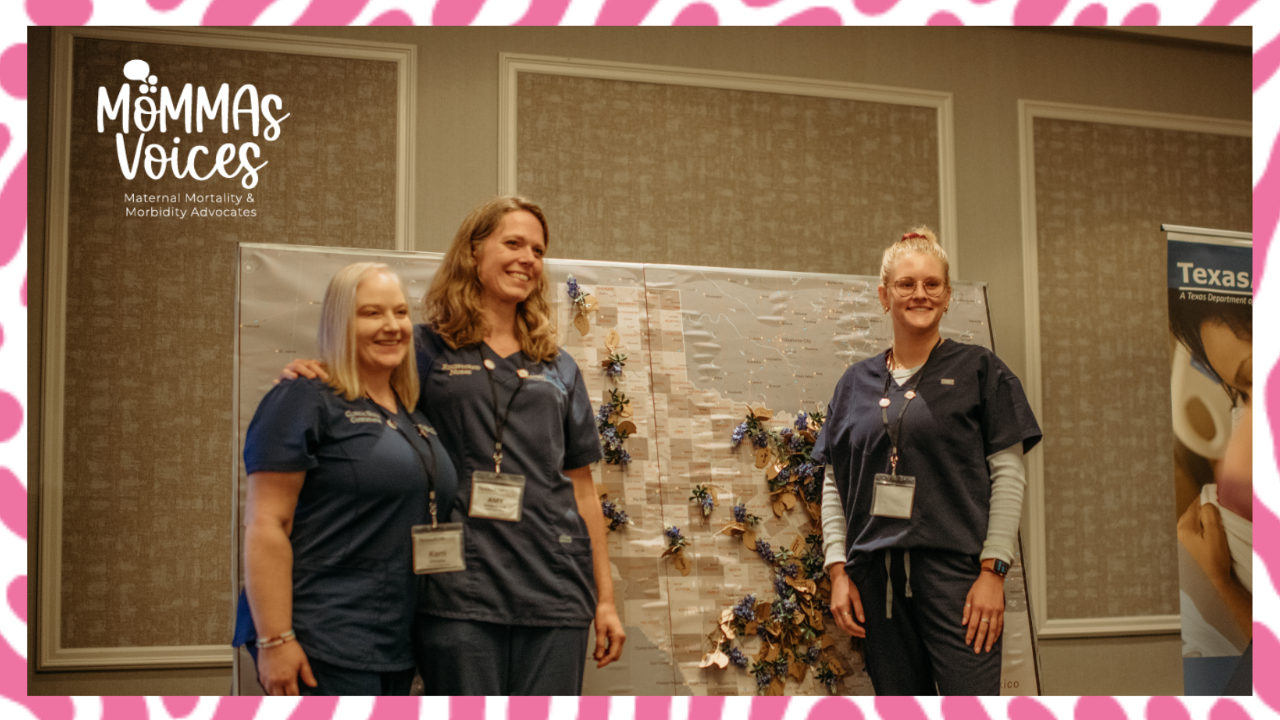
Feb 23, 2026How MoMMAs Voices supported the Texas Collaborative for Healthy Mothers and Babies (TCHMB) PPED Project
Maternal health doesn't end at delivery – growing research, including important work to understand the leading causes of maternal illness and death, show that the postpartum period is just as important to maternal health as what happens during pregnancy.
The Texas Collaborative for Healthy Mothers and Babies (TCHMB) studied the maternal health data in the state, and recognized a critical gap between recognition and treatment of a life-threatening disorder known as postpartum preeclampsia. Just like when preeclampsia occurs before delivery, postpartum preeclampsia is a serious, potentially life-threatening disorder related to high blood pressure that can occur up to six weeks after delivery. Research suggests that up to 75% of maternal deaths due to preeclampsia happen in this timeframe.
One area where improvements could be made centered around ensuring that Emergency Departments (ED) quickly recognized when patients had recently had a baby and might be experiencing a hypertensive crisis. The Preeclampsia Foundation team, including our MoMMAs Voices staff, were ready and willing to partner together to implement this important work across the state of Texas.
“Postpartum preeclampsia is a medical emergency that too often goes unrecognized once a patient leaves the obstetric setting,” said Susan Dimitrijevic, Clinical Director at TCHMB and lead of the PPED project. “When a postpartum patient walks into an emergency department, that recent birth history can be missed, leading to delays in treatment that can have devastating consequences. The PPED project is about closing that gap and making sure every provider is equipped to recognize and respond quickly.”
Defining The Problem: Missed Warning Signs in the Emergency Department
The 2020 Texas Maternal Mortality and Morbidity Review Committee (MMMRC) and the Texas Department of State Health Services reported that:
- 11% of pregnancy-related deaths were due to preeclampsia or eclampsia.
- Half of these deaths occurred within 42 days of delivery.
This reinforces that emergency teams may struggle to recognize postpartum preeclampsia. The delays in diagnosis and treatment can have severe consequences.
About the PPED Project
TCHMB’s Recognition and Response to Postpartum Preeclampsia in the Emergency Department (PPED) initiative aims to:
- Identify postpartum patients in the ED with severe hypertension or preeclampsia.
- Treat these patients quickly to prevent complications.
- Improve communication between Emergency Medicine and Obstetric care teams.
To achieve these goals, TCHMB launched the PPED initiative as a statewide quality improvement effort focused on improving how emergency departments recognize and respond to postpartum preeclampsia. Through clinician education, practical clinical tools, and shared learning across Texas hospitals, teams worked to strengthen systems of care and integrate best practices into everyday workflows. The insights gained from this work are now guiding the development of a PPED Toolkit to help expand and sustain these improvements.
Our role via MoMMAs Voices patient integration
As one of the five largest birthing states, Texas healthcare providers support about 10% of all the births in the United States each year. Our MoMMAs Voices team works closely with quality improvement leaders across the state on multiple projects to support improved outcomes for moms and babies. For the PPED project, our team supports this critical work by:
- Raising awareness of postpartum preeclampsia symptoms and risks among maternal health advocates.
- Bridging communication between patient voices, community leaders, and healthcare teams.
- Supporting the dissemination of TCHMB’s resources and clinical tools.
- Elevating lived experiences to show the impact of missed diagnoses in the ED.
This effort has been coordinated closely with our Texas partners to ensure that the patient and family perspective is included in quality improvement efforts across the state.
What we’ve learned so far
"Being involved in the TCHMB Executive Committee has given me a front-row seat to see how patient voices can transform clinical practice," said Nicole Purnell, Director of Community Education & Engagement for the Preeclampsia Foundation, who oversees its MoMMAs Voices program. "What we've learned through the PPED project is that when you bring lived maternal experiences into the room with clinical experts and quality improvement leaders, you don't just get better protocols – you get protocols that actually work for real mothers in crisis situations.
"This is exactly the kind of systems-level change that happens when MoMMAs Voices is embedded as a true partner in quality improvement work."
Looking Ahead
The learnings and practices developed during the PPED project not only inform other hospitals and healthcare centers across Texas, but add to the evidence that other states can use for their own postpartum preeclampsia recognition initiatives.
“The hope is that the successes and even challenges of this project can be shared widely with maternal health quality improvement leaders across the US,” said Purnell. “Our role at the center of patients with lived experiences, clinicians, researchers, and quality improvement team provides a unique way that we can shift how care is managed.”
Every postpartum patient who enters an emergency department deserves recognition as someone who has recently given birth and is still at risk. Together, by improving recognition, response, and coordination, we can save lives.
To Learn More:
About the TCHMB PPED project: https://www.tchmb.org/pped
About postpartum preeclampsia: www.stillatrisk.org
Don't miss a beat!
New moves, motivation, and classes delivered to your inbox.
We hate SPAM. We will never sell your information, for any reason.